
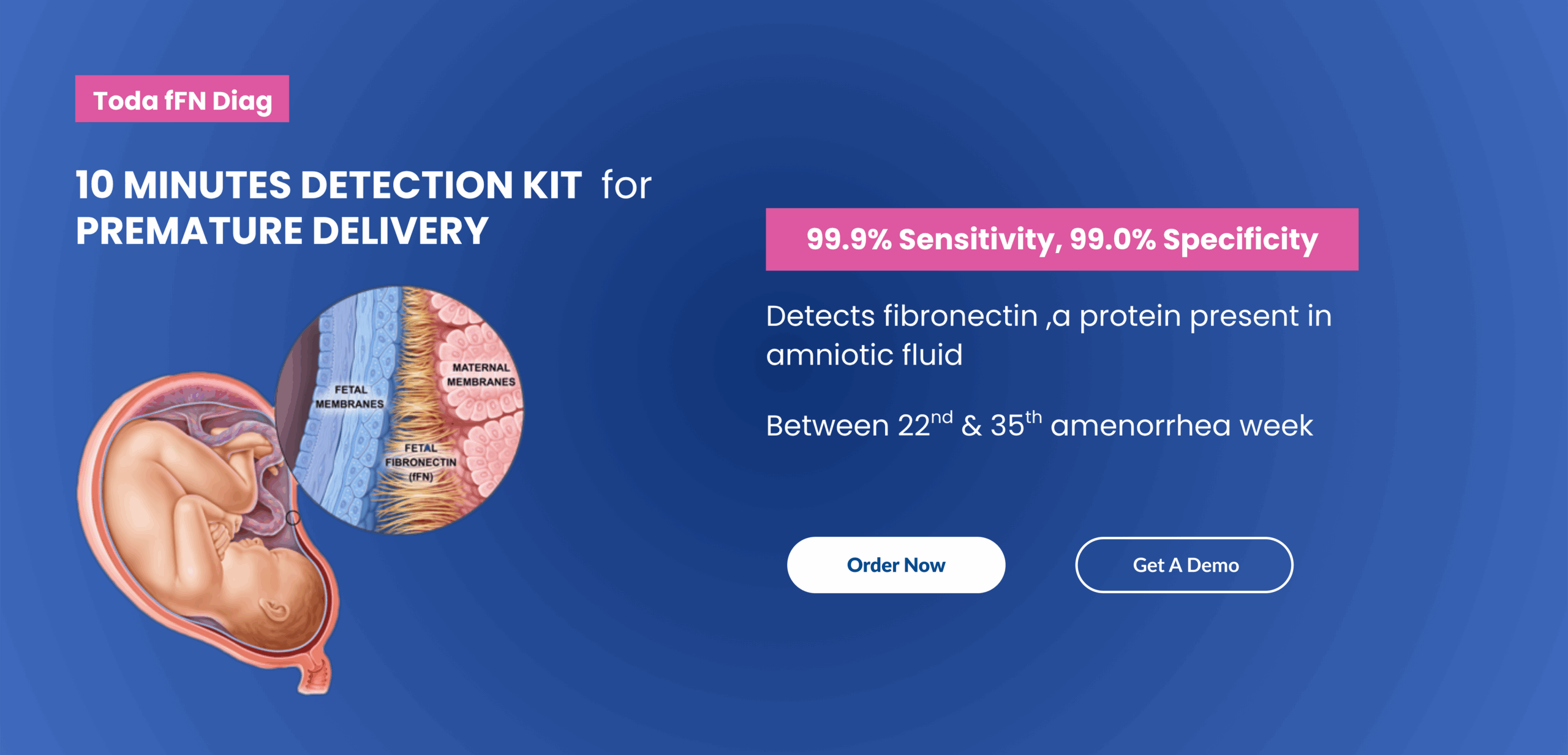
Threat of Premature Birth (PTL) is a complication of pregnancy defined as the risk of a pregnant woman going into labour between the 22nd and 36th amenorrhoea week2, giving birth to a premature baby. Testing for fetal fibronectin (fFN), a protein produced by the trophoblast and normally present in the amniotic fluid and also around the amniotic sac, enables early detection of PTL when this protein is found in vaginal secretions.3 Early detection of PTL could therefore prevent premature delivery.
Respiratory Distress Syndrome (RDS) : This is the most common risk in premature babies, particularly before34 weeks.
Intraventricular haemorrhage : Prematurity can lead to serious neurological complications or long-termsequelae.
Infections : An immature immune system is more vulnerable to infections, particularly neonatal infections (septicaemia, pneumonia, meningitis).
Growth retardation and long-term development problems : Risk of intrauterine growth retardation, delayed motor or cognitive development, and long-term learning difficulties.
Neurological complications (cerebral palsy, cognitive disorders) : Potential risk of neurological sequelae such as cerebral palsy, developmental delays or learning difficulties.
Apnoea in premature babies : The immaturity of a premature baby’s respiratory and nervous system may require monitoring and sometimes treatment in a neonatal intensive care unit (NICU).
Intra-uterine infection (chorioamniotitis) : An infection that can lead to serious maternal infection (chorioamniotitis), causing fever, abdominal pain and increased heart rate. If left untreated, it can lead to maternal septicaemia.
Post-partum haemorrhage : Haemorrhage that may be due to uterine atony (difficulty for the uterus to contract properly), vaginal or cervical tears, or retained placental fragments.
Emergency medical interventions : In the event of complications threatening the health of the mother or foetus, an emergency caesarean section may be necessary, increasing the risk of surgical complications, infections and healing problems. This is why it is essential to prevent this complication by detecting it early.
Guide your diagnosis in just a few minutes
Avoids overuse of tocolytics and antibiotics
Reduces hospitalisation costs
Clear interpretation of results
Reduced waiting time for results
Reduced stress caused by various clinical examinations
Improved management of the care pathway
Avoids unnecessary hospitalisation
Reduces the risk of serious complications requiring hospital treatment